Archive for June, 2012

Chilaquiles Con Verdolagas

purslane chilaquiles 350x318 Chilaquiles Con Verdolagas

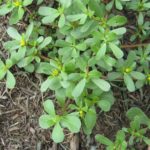
Purslane chilaquiles cooking into yumminess.

Chilaquiles are “casserole dishes of varying ingredients” made of leftover tortillas or chips. According to Sunset Mexican Cookbook, a 1969 publication I picked up for 50 cents at the Fairplay Library book sale last summer, they are sometimes called “Poor Man’s Dish” for this reason.

The same cookbook explains that Mexican cuisine occasionally utilizes the “strange” vegetable, “verdolagas,” which is Spanish for purslane! If you don’t know purslane (Portulaca oleracea) already, you should. This garden weed is extremely nutritious raw, supposedly containing more omega 3 fatty acids than some fish oils. It is so ubiquitous that people weed it out of their gardens and toss it into the compost heap without a second thought. Purslane’s fleshy leaves are also common alongside sidewalks, where the plant can often be found growing in abundance.

Since purslane is about to be the wild ingredient of the month at Hunger & Thirst’s July recipe round up, and since my life is about to take a very busy twist, I figured I’d better throw some purslane into my chilaquiles right quick and bang out a recipe before I start going completely insane. Read the rest of this entry

Wild Edible Notebook—June Release!

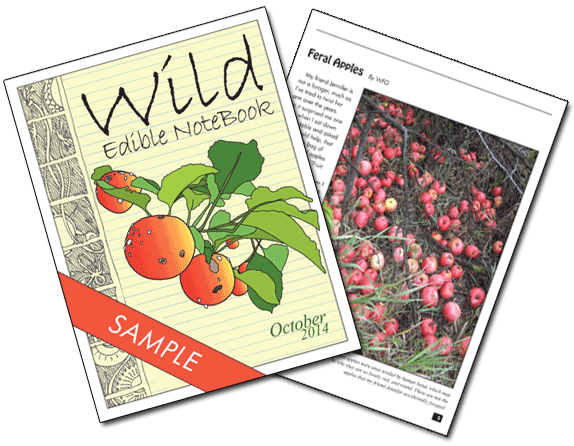
WEN June2012 640 226x350 Wild Edible Notebook—June Release!And just when you thought it’d never arrive… The June 2012 Wild Edible Notebook is here!

This edition centers on two plants—bluebells of the genus Mertensia followed by field pennycress (Thlaspi arvense), a plant that means much to me, though  I’d written little about it prior to this release. Gregg says it’s the best one yet, though he said that last month too.

As with all other Wild Edible Notebooks, if you want to read it, you have to download it—and that means joining the list if you haven’t already.

How to Join the List

If you go through the process to join the list you will receive one (at most two) emails from me a month. You can unsubscribe whenever you want. To join, scroll to the bottom of this page and fill in your info. You’ll receive an email asking you to click on a confirmation link, and after doing that, you’ll get another email with the download link for the latest issue of the Wild Edible Notebook—in your choice of either a handy print-and-fold booklet or a file you can breeze through onscreen or print out one-sided. You’ll be able to access some prior notebooks as well.

Calling Advertisers

Take advantage of free advertising via the Wild Edible Notebook. This offer is open to both established purveyors of wild food products/equipment as well as individuals with classified ads. These will be free of charge until further notice, so please, send them my way and I’ll try to get you in the next issue.

Mint Madness

wild mint 350x262 Mint Madness

Wild mint, Kittredge, Colorado.

There’s nothing like accompanying your boyfriend to a work meeting expecting to sit idly by and instead being invited to forage the back yard.

“I’ll weed your garden while I wait,” I offered to his new web client, glancing hungrily at the carpet of young goosefoot (Chenopodium spp.) decorating the landscape.

“Oh, you don’t need to weed it,” he told me, “but feel free to graze as much as you like.” Seriously? Hell yeah!

We apparently got there just in time too because the landlord would be coming by shortly to spray the weeds. I found a plentiful and diverse trove of edibles there in Kittredge, Colorado, including several that I have not yet had the opportunity to collect. Among them was an inconspicuous wild mint mixed in among the other weeds on the bank of the creek that abuts the property.

“If it has a square stem and smells like mint, it’s an edible mint,” Cattail Bob Seebeck told me on a recent foraging adventure. Not all squared-stemmed mints smell or taste like mint—for example, wild oregano (Monarda fistulosa) and horehound (Marrubium vulgare)—but  there are a few wild ones that evoke the commercial variety, making them as palatable to the masses as they are to obsessive wild food foragers like yours truly. Read the rest of this entry