Warm and Fuzzy Mullein Celebration

mullein processing station 350x262 Warm and Fuzzy Mullein Celebration

Mullein processing station.

No matter which way I turn, mullein (Verbascum thapsis) seems to insert its fuzzy leaves into my life.

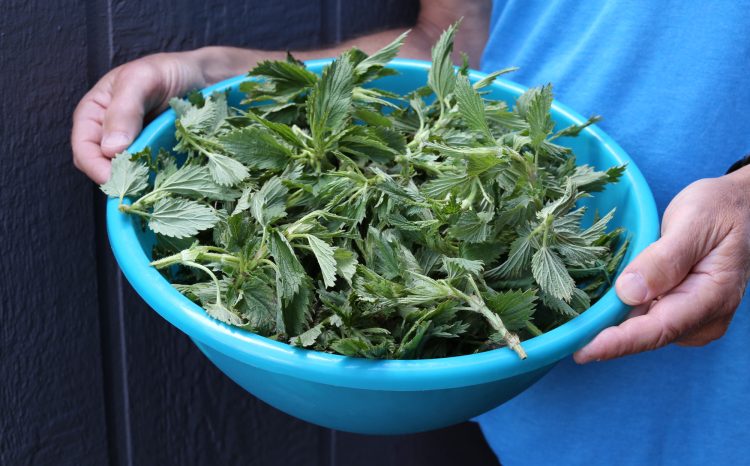
First there was the requested rescue mission to Aurora (on June 18), where Jim and Nancy invited me to weed out all of their mullein. Much to my excitement, there were about 20 big, healthy rosettes—a far cry from last year’s 10,000 tiny ones. This time I gathered enough mullein that when washed and laid out to dry, it covered three cookie sheets with a small mound of leaves on each one. 

Of course, this brought to mind the need to do something with last year’s dried mullein leaves, of which I still have a medium-size box full.  Read the rest of this entry

The Great Elkslip Experiment Parts II & III

elkslip dip cracker 350x301 The Great Elkslip Experiment Parts II & III

Delicious Elkslip Dip on a cracker.

This story starts with Part I of the Great Elkslip Experiment, so if you haven’t read that entry yet I suggest you do so before proceeding.

Part II – Creamed Elkslip

What I am calling Part II of my experiment actually involved eating the elkslip, so after reading several reports on marsh marigolds (Calthus spp.)—both about our local elkslip in the Colorado Rockies (Calthus leptosepala) and the eastern variety, commonly called cowslip (Calthus palustris), I settled on creamed elkslip for our first culinary trial.

Keep in mind that after a successful lip test (zero irritation), Gregg and I consumed only about 25 small elkslip leaves between the two of us, and they boiled down to next to nothing in 20 minutes. Some sources say to change the water several times and boil marsh marigolds for as long as 60 minutes to remove the bitterness, but ours were not very bitter. They turned the water an amazingly bright green.  Read the rest of this entry

The Great Elkslip Experiment Part I

western marsh marigold elkslip 350x303 The Great Elkslip Experiment Part I

Calthus leptosepala the western marsh marigold.

There is a new wild edible plant in my refrigerator, one I have yet to try, and about which there is some debate as to its edibility. That plant is elkslip, aka mountain marsh marigold (Calthus leptosepala), and today I will conduct Part I of my experiment eating it.   

Don’t Slip on the Mountain Marsh Marigold, You Elks!    

I found the elkslip growing in and around wet areas in the forest near our house (at approximately 10,500 ft in the Rocky Mountains outside of Fairplay, Colorado).   

I first read about this plant, which is also referred to as “Western marsh marigold,” in wild edible plants guru, Euell Gibbons’ 1973 book, Stalking the Faraway Places and Some Thoughts on the Best Way to Live. (Man, what a title!)   Read the rest of this entry

yucca flowers 350x292 Aurora Yucca and the Recipes I’ve Tried With It

Delicious yucca flowers foraged from Aurora Colorado.

The yucca around Denver is in full bloom right now, such that when we went to Gregg’s parents’ house a few days ago on June 18, the hillside in the field across the street was covered with spires of the bulbous white and sometimes purplish flowers. Unfortunately, they were protected from would-be foragers by a network of wire and wooden fences, not to mention a small amount of cow traffic. 

Gregg’s parents live in a 55-and-over “active adult community” in Aurora. Folks are always out and about—walking, running, swimming, playing tennis and golf. But I figured if we got up early in the morning and headed out there we might avoid a few looks as we scaled a fence I’d scoped out, one that got us to a small 10×20-yard patch of yucca that wasn’t encircled by the second, interior, cow-protecting fence. 

The plan worked and we set to harvesting a few yucca flowers from each plant, checking for bugs first and snipping them into our bags while taking care not to get poked by the sharp leaves. In the midst of our foraging, however, an over-55 woman drove up to a town-home on the hillside nearby and demanded to know what we were doing.  Read the rest of this entry

Reconciling Docks

Breckenridge dock mature 261x350 Reconciling Docks

Mature dock of a large-leafed variety.

The genus Rumex is giving me a headache. Damn docks! Why are there so many of you? According to Wikipedia, there are about 200 plants in the genus Rumex—which I guess explains why I’ve been having so much trouble identifying them correctly!

Not to get to deep in the muddle that docks made my brain into, but yesterday I unpublished my two dock entries (one at etmarciniec.com and one here at Wild Food Girl) after a reading of Thayer (2010) followed by more online research revealed some amount of confusion on my part over which docks I was eating and by what common and scientific names they are called.

Below is an attempt to clarify:

The Docks I Eat, See, and Dream About

Over the last two years I have been eating two different varieties of dock in and around Park County, Colorado. One has large, wide leaves and grows in moist places. After a number of unsuccessful culinary experiments where I generally erred by collecting leaves that were much too mature to be palatable, this spring I’ve found (per Thayer’s recommendation) that collecting the young leaves prior to or during their slimy unfurling yields much better food. So far I’ve prepared them by chopping the leaves and petioles (leaf stalks) into thin horizontal slices and then sautéing them, with decent results. Read the rest of this entry

Crazy for Cow Parsnip Again

furled unfurled cow parsnip leaves 350x262 Crazy for Cow Parsnip Again

Furled and unfurled cow parsnip leaves ready for boiling.

I gathered some cow parsnip a few days ago on June 15th. It’s still young in the high country (at 10,500 feet), so I just took a little—a few snips here and there of furled, unfurling, and newly unfurled woolly green leaves and petioles (leaf stalks), from a community of plants, no more than two and usually just one cutting per plant.

At home I prepared the same old tried and true recipe from last season I got from Kathryn G. and Andrew L. March’s Common Edible and Medicinal Plants of Colorado, (1979)—boiled cow parsnip leaves and petioles with finely chopped raw onions, soy sauce, and butter—and relished every minute of it. It’s a crazy weird taste, but I continue to love it.  Read the rest of this entry

Wild Edible Notebook June Release!

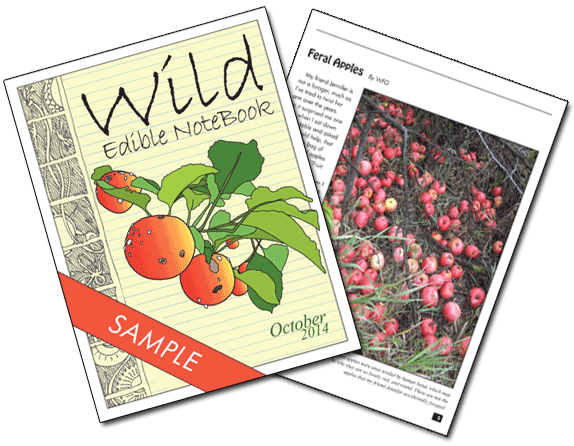
wild edible notebook June sm 1 226x350 Wild Edible Notebook June Release!Heads up, readers: The Wild Edible Notebook is here at last! Click through to the end of this entry to download the June edition, which features story-style chapters on goosefoot, cow parsnip, and yucca in two convenient and colorful downloadable PDF formats.

About the Wild Edible Notebook Series

My plan is to publish the Wild Edible Notebook on a monthly basis throughout the summer.  Users (particularly those in the Colorado high country/foothills) can print out June, for example, read the stories and get excited about wild food hunting, and then be able to look for those plants right away because it’s the right time of year.

By the time July rolls around, I’m hoping to have the system set up so I can “squeeze” your email address out of you (muhahaha) before you can download the next edition, but for now, it’s free and easy. The articles in the current edition are repeats of content posted here on the site; the difference is the format. In the future, I hope to get on top of my game enough to have some pieces available solely in the Notebook. Read the rest of this entry

Wild Beach Pea Stir Fry with Dandy Flowers

Lathyrus japonicus 350x262 Wild Beach Pea Stir Fry with Dandy Flowers

Lathyrus japonicus on the shore in Old Lyme CT.

I ran into an old high school friend at the beach in Connecticut the other day. She was busy chasing around her two toddlers who kept trying to pick the pretty purple flowers in bloom amidst the dunes. “Don’t pick those flowers,” she admonished. “Don’t go in the grass. We need to keep the dunes healthy.” She was right, of course—because sand dunes and the plants therein often play an important role in protecting the land against storm surges—but at the time I was glad she hadn’t seen me picking pea pods from those same dunes just a few hours earlier! 

The purple-flowering plant that captured the children’s attention was also the one that had captured mine—Lathyrus japonicus, the wild beach pea. Lee Allen Peterson (1977) puts the range of this plant as the east coast of the United States south to New Jersey, in addition to the shores of the Great Lakes, Oneida Lake, and Lake Champlain. Plants for a Future, the U.K. based “resource and information centre for edible and otherwise useful plants,” expands the range to include sandy coasts from Alaska to northern California, western and eastern Europe, and eastern Asia/China.  Read the rest of this entry

brill wild edibles app 233x350 Wildman App Makes Foraging with Technology Likely

Wild Edibles app by Steve Brill and WinterRoot. Image nabbed from iTunes.

Steve Brill recently released “Wild Edibles,” an iPhone app that helps foragers identify and use edible wild plants. The free version, Wild Edibles Lite, contains 20 common plants, while the full version costs $7.99 and offers “165 edible plants, 52 minor look-alikes, 719 images, and 162 vegan recipes.” The release is compatible with iPhone (iOS 3.0 or later), iPod touch, and iPad, with an Android version currently under development by the software’s creator, WinterRoot LLC

Considered to be one of the foremost experts in the foraging field, “Wildman” Steve Brill has held wild edible plant tours in and around New York City since 1982 and published several books on foraging and wild food preparation. He is perhaps most well known for his 1986 arrest by undercover NYC park rangers for eating a dandelion in Central Park. 

I don’t own an iPhone myself, but I downloaded the free version onto Gregg’s phone the other day to take a look. Even though Wild Edibles Lite only contains 20 plant entries, there are still several plants in there that I don’t yet know, despite the fact that I own Brill’s comprehensive 1994 guide, Identifying and Harvesting Edible and Medicinal Plants in Wild (and Not-So-Wild) Places. (Informative and thorough as that book is, it’s big to be toting into the field and I find the black-and-white botanical illustrations hard to match up definitively to the actual plants—so I often reach for something smaller and in color instead.)  Read the rest of this entry

A Kettle of Nettles That Kept on Giving

stinging nettles 256x350 A Kettle of Nettles That Kept on Giving

Cook stinging nettles before consuming lest you get stung in the mouth.

Accounts of stinging nettles are far from uncommon in the wild foods literature; likewise, stinging nettle soup is sold in more than a few restaurants—such that some wild foods neophytes like Gregg’s little sister Caity have more experience with the plant than I do, isolated as I am in high-mountain Colorado. For me, then, finding a small colony of nettles growing out of a culvert in Woodstock, New York last week was cause for great celebration.

I tried nettles on one other occasion three years ago, when, at the end of my cross-country journey to Colorado, I found myself alone and foodless save for a grocery bag full of nettles (which miraculously made it four days without refrigeration in the back seat of my car from State College, PA where it was gifted to me by a friend). This was before my newfound obsession with wild edible plants, and I worried about getting sick as I stripped and boiled the prickly leaves in the unfamiliar kitchen that has since become my own. (Everything turned out fine, though I can’t honestly say I relished the nettles at that moment. Funny what fear can do to the taste buds!)  Read the rest of this entry

 Page 5 of 8  « First  ... « 3  4  5  6  7 » ...  Last »