Archive for 'Denver'

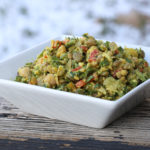
Ready-made Road Trip Salad

road trip salad 350x258 Ready made Road Trip Salad

Ready-made road trip salad–my favorite of all the road meals on our inaugural trip with Myrtle the van.

We embarked on a road trip through Colorado, Utah, and Nevada to California’s Eastern Sierra last week. I had a lot of delicious wild greens on hand that I’d collected in Denver immediately prior, and I wanted to eat fresh salad for the duration of our journey through the deserts, so this is what I came up with.

The cabbage was a lazy last minute choice as a base to temper the bitter and pungent wild greens, as we had no store-bought lettuce in the house and I didn’t feel like going out to buy some. I packaged it all up in a big bag, and the dressing in a recycled salad dressing bottle, and served it nearly every day of the trip.

Surprisingly Gregg—who is not much of a salad eater—asked for it every time, and touted my culinary prowess. Score! Read the rest of this entry

My turn to do wild edible gnocchi

stinging nettles in pot 350x233 My turn to do wild edible gnocchi

In Langdon Cook’s instructions, you boil the nettles briefly to remove the stingers. Photo by Gregg Davis.

It’s markdown season at the grocery store, now that the tourists are in absentia for a while, joined by the locals who migrate to parts warmer during mud season too. So it’s time for the good deals—such as the $1 bag of slightly soft “Red Skin Yellow Flesh Colorado Sunrise” potatoes that Gregg and I argued over in the grocery store last week.

“They’ll go bad,” he said.

“I’ll use them all once,” I countered, throwing them into the cart.

Everything gnocchi without moderation

A few days later, as the universe would have it, I came into a wealth of dried nettles and porcini. I won’t say how I came by them, but you can probably guess. So it was logical that I should decide to make nettle gnocchi. Read the rest of this entry

Wild Edible Notebook—April release!

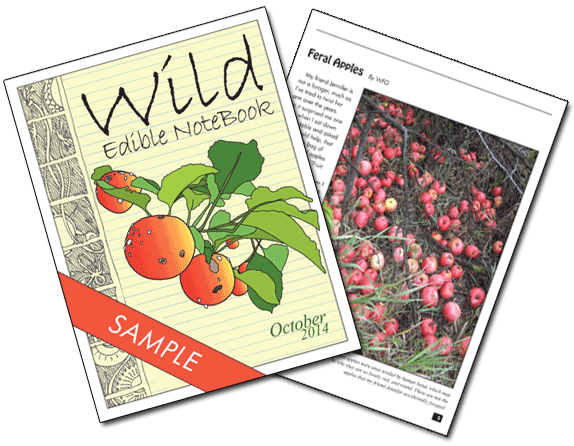
WEN April 2013 640 226x350 Wild Edible Notebook—April release!Good news! After nearly a year on hiatus, the Wild Edible Notebook is back!

This first-time April edition centers on everybody’s favorite wild food—dandelions. Though snow still covers the ground here in the Colorado high country, the dandies have been up in Denver for a while now, and it seemed a safe bet for foragers in other locations too. I also included a piece I wrote on spring foraging in the Denver area last year. Although the season’s change is taking its time this spring (thank goodness), my hope is that this will at least get you thinking about all the delicious wild food that awaits. There’s a review of first-time author Rebecca Lerner’s recently released book, Dandelion Hunter, a wild edible poem from correspondent Brad Purcell, and a handful of recipes to boot.

I’m not going to lie to you—this issue contains recycled blog content, so if you’re an avid reader of this site, some of the text may strike you as familiar. Still, I included a bunch of as-yet-unseen photos to sweeten the deal while I wait for my own local wild food to sprout.

As with all other Wild Edible Notebooks, if you want to read it, you have to download it—and that means joining the list if you haven’t already.

How to Join the List

If you go through the process to join the list you will receive one (at most two) emails from me a month. You can unsubscribe whenever you want. To join, scroll to the bottom of this page and fill in your info. You’ll receive an email asking you to click on a confirmation link, and after doing that, you’ll get another email with the download link for the latest issue of the Wild Edible Notebook—in your choice of either a handy print-and-fold booklet or a file you can breeze through onscreen or print out one-sided. You’ll be able to access a few prior notebooks as well. Read the rest of this entry

Pumpkin, nettles and beer, oh my!

acorn squash nettle beer soup2 350x316 Pumpkin, nettles and beer, oh my!

Acorn squash, nettle, and beer soup, perfect for warming up after a wet spring snowstorm. I won’t be putting the seeds on top again, however, because they lost all their crunch in an instant.

I’ve had a request so I hereby present two squash nettle soups, both made with ingredients that are out of season here at 10,000 feet in the Colorado high country.

The first—a pumpkin, nettle, and beer soup—I made in November after receiving the gift of a pumpkin on our doorstep after a friend in possession of one needed to unload the big squash so as not to leave it in his car while he flew out of town. I am certainly not one to kick a tall pumpkin fairy in the mouth.

The idea of pairing stinging nettles (Urtica dioica) with squash came to me originally from Rebecca Marshman, the youngest chef on BBC America’s Chef’s Race, whose acquaintance I made during the filming of the third episode. She made a divine nettle minestrone with nettles gathered by her teammate, Sophie Michell. To make something like it, she told me to start by sautéeing onions and garlic, then to add small chunks of pumpkin to the pan for “a beautiful color,” and to put all that into the soup along with chicken bouillon, chopped potatoes, carrots, and some kind of beans.

So my recipe borrows from Rebecca’s idea, but is a creamy soup, with Parmesan cheese and a few brewskies to boot. It is an adaptation of an adaptation of a Moosewood Cookbook recipe followed by another one from the internet. I thought the nettles would make a good substitute for chicken broth. Read the rest of this entry

wild food 030 350x262 Bent on pulverizing Short stemmed Slippery Jack’s bad rap

Wild chicken stew with slippery jack powder.

Lately I’ve been powdering my dried wild mushrooms, batch after batch and species after species, then attempting to use the powders in various kitchen concoctions.

First were the porcini (Boletus edulis), from which I made a divine sauce, followed by not-so-bad hawks wings (Sarcodon imbricatus) venison marinade and cream sauce. Short-stemmed slippery jacks (Suillus brevipes) were a logical choice after that—in part because I have so many, and in part because I refuse to believe them inferior despite their reputation.

I went through a phase obsessing about Suillus brevipes this fall.

Said me on the Facebook: “Not to harp on the (short-stemmed) slippery jacks or anything, but I’m growing very fond of these guys. I’m tempted to say they rival Boletus edulis, but I think Butter at Hunger and Thirst might have my head for it.” (This because Butter is such a porcini fanatic as to pass up the short, slippery dudes.) Read the rest of this entry

A sumac and angelica summer cocktail in winter

sumac angelica 265x350 A sumac and angelica summer cocktail in winter

Tangy sumac and angelica liqueur

Just after posting my pinklog, I made something else pink by accident.

“Tangy angelica liqueur,” Gregg called it, and indeed, he guessed correctly because the base of this cocktail is a spicy angelica liqueur we made in the fall. I’ve been drinking it by itself, chilled over ice, and liking it—but not quite loving it, not like I loved the elderberry flower liqueur of this past summer, or the berry liqueurs before that.

Still, wild angelica (Angelica spp.) is a good friend of mine, one I made after much trepidation on account of how it resembles poison hemlock. This particular batch we gathered from approximately 11,000 feet in Colorado in the days just after Gregg proposed to make an honest woman of me.

Tonight, as I cleaned dishes piled in the kitchen from two days ago, I came to a saucepan of dry, abandoned sumac “berries” (Rhus glabra) from which I had extracted tea to use in a tangy butter sauce for fish, and my need for clean dishes inspired the cocktail. So I simmered the sumac leftovers down in a small amount of water to make as tangy a tea as possible, then let it cool and poured it over ice with the vodka-based angelica liqueur. Yum city. Read the rest of this entry

Pretty in wild pink

prickly pear syrup light 350x262 Pretty in wild pink

In the glow of the prickly pear syrup I see…

I don’t know why suddenly all of my wild edible concoctions are coming out hot pink—maybe it’s because pink is the color of love and it’s February? Regardless, here is some pretty-in-pink wild edible fun if you’re game:

Prickly pear & grapefruit syrup

Butter and I foraged these small, wrinkled prickly pears (Opuntia spp.) in the Denver area in fall, and every day of my time-sucking job after that they sat out on the counter, waiting for me to cook with them, until one day they were fully dried out.

Read the rest of this entry

Venison meatloaf with sock berry glaze

venison highbush cranberry meatloaf 350x262 Venison meatloaf with sock berry glaze

Venison meatloaf glazed with an ornamental highbush cranberry tomato glaze.

Call me a “bitter-plant apologist,” but I’m pretty pleased with myself for this, my first foray into cooking with Viburnum opulus, the highbush cranberry that is the escaped ornamental cousin of the much-celebrated native species.

Says Sam Thayer in my go-to guide, The Forager’s Harvest (2006):  “The two native highbush cranberry species, Viburnum edule and V. trilobum, are generally highly esteemed for their flavor, while the introduced European V. opulus has terrible fruit.” And this: “The European species is extremely bitter, accentuated by other bad flavors, while the native type tastes very much like cranberries. In fact, European highbush cranberries are so terrible that I don’t even consider them edible, despite the claims of some bitter-plant apologists—and frost emphatically does not improve their flavor.”

That said, my friend Butter—who coined the term “stinky sock berries” to describe the stinky, foul-tasting V. opulus— is a convert, having once discovered their abundant, ripe fruit near-glowing on its branches when most everything else nearby had turned brown with the change of seasons. She’s collected them ever since. Read the rest of this entry

Late November foraging in the Denver low country

highbush cranberry CO 350x262 Late November foraging in the Denver low country

The stinkier of the highbush cranberries, these guys are turning into sauce whether I stink my fiance out of the house or not, by golly.

Well, Denver’s not low country exactly — Mile High City and all— and the part where my friend B and I like to forage is one of the higher points in said low country, but it’s still low compared to the upper reaches of Colorado where I live, even though we moved down from 11,000 feet to 9,800-feet or so this summer.

Still, it’s supposed to be winter up here now, and most of the plants think it is, so it’s not ideal for food foraging aside from cold weather finds like pine needles for tea and flavoring or willow bark to sooth the ever-present, new-job-related headache from which I suffer.

You’ll understand why I’m so excited, then, that—after hightailing it from work to Denver for Thanksgiving and driving home to Summit County the next day only to discover I left my computer behind and had to go back to the fiancé’s parents’ house for it —I had opportunity to visit and forage food with Butter B, wildcrafter extraordinaire, and wound up going home with sacks upon sacks of wild stuff to eat.

That’s right: It’s November, and foraging season down Denver way is still kicking. Below is what I came home with yesterday. It’s stuff you might be able to spot, right now—and, upon absolute positive identification (of course), get busy with in the kitchen yourself:

Read the rest of this entry

purple tinged yucca 350x253 Yucca and Memorial Day Weekend Go Together Like

Yucca flowers and wild Allium (garlic) in the pan. Note the purple tinge on the outer petals of these otherwise creamy-white flowers.

On Memorial Day last year we were still snowboarding at A-Basin, the snow drifts in the backyard were up to the life-size metal deer’s neck, and the yuccas down Denver-way waited until late June to bloom. This year, the snow is gone except for a handful of high elevation chutes and the yucca is in full bloom down the hill, a month ahead of last year.

Who can understand nature’s whim? Is her massive schedule change a punishment for our squandering of her resources, or is she just in one of her moods? Either way I figure we might as well take advantage of the yucca bounty now while the plants are in bloom.

Both Yucca and Yuca Are Delicious

Yucca is not the same as yuca or cassava (Manihot esculenta), the delicious and starchy potato-like root popular in Caribbean cultures.

Instead, wild yuccas (Yucca spp.), which cover miles of dry zones throughout the Western United States, have edible flowers, buds, and fruits. They are particularly conspicuous when in bloom, their waxy, bulbous white flowers dangling dense upon tall, upright flower stalks. In our local central-Colorado species, Yucca glauca aka soapweed yucca, there is one flower stalk per plant, and the flowers, while creamy white, often have pinkish/purple outer petals upon them. California Joshua trees (Yucca brevifolia), on the other hand, have “one flower stalk for each arm,” as Michael Moore explains in Medicinal Plants of the Mountain West (2003). Read the rest of this entry

 Page 1 of 3  1  2  3 »