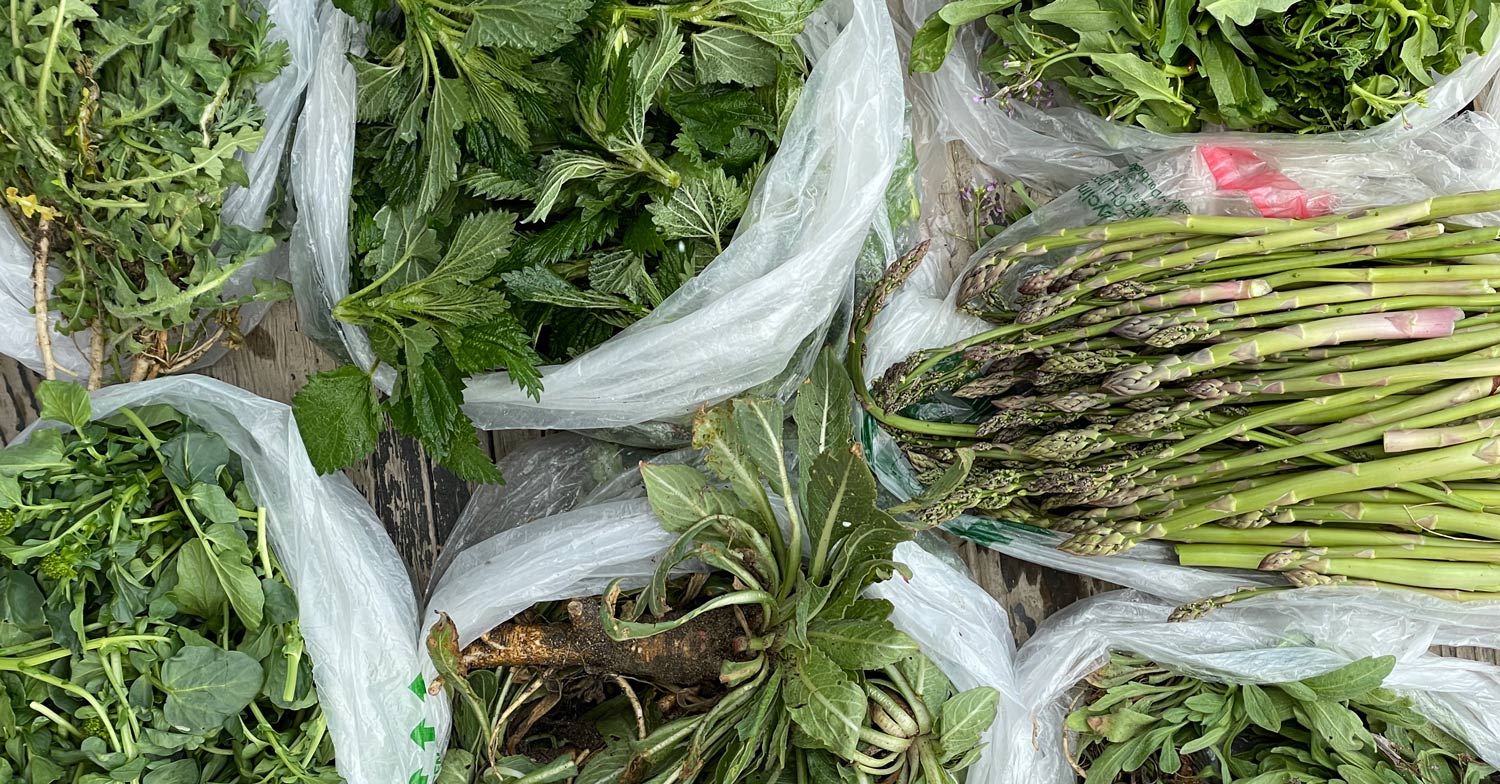
Spring is a great time of year for edible wild greens—but the peak happens fast, so you have to catch it at the right moment. As temperatures warm and the trees start leafing out, a bit of moisture can spur an abundance of tender greens. Many of these are “weeds” growing in yards, roadsides, and disturbed ground, while others are native species. This list focuses on ten of my favorite edible spring plants—some well-known, others less familiar. Many are found widely across the United States, and a few are more common in the West. Please use this as a starting point and make sure to confirm your identification using one or more guidebooks.

Siberian elm
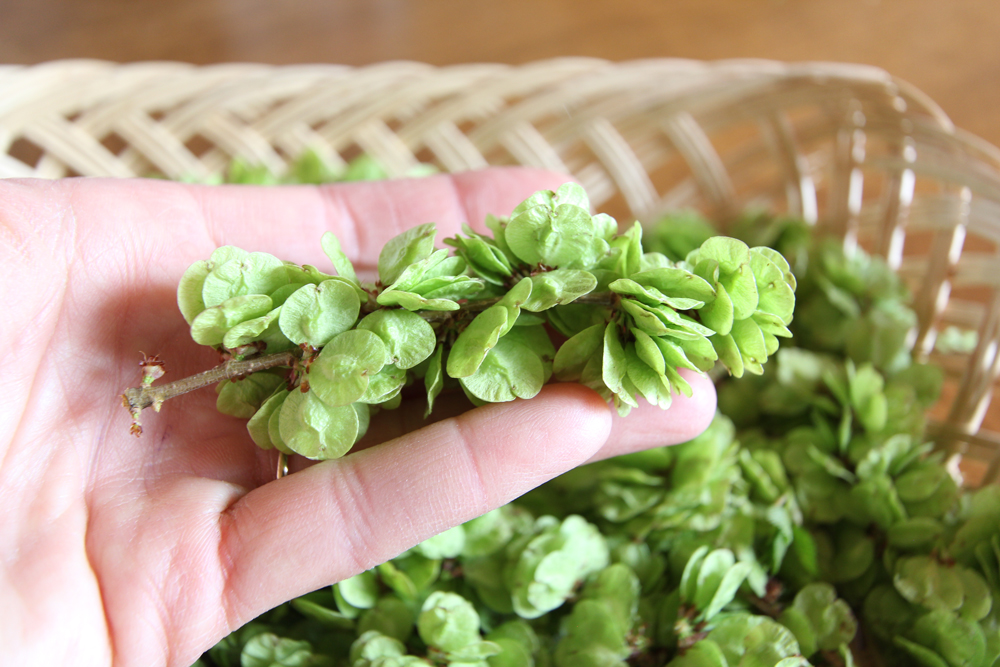
My favorite salad green comes from a tree. If you live where Siberian elm (Ulmus pumila) trees were widely planted, you probably know the papery green bits that line the branches in spring—and think of them as a nuisance. Think again. Those bright green samaras are great in salad. Strip them from the branches while still vibrant green, before the trees leaf out. Inspect for insects, and don’t worry about the chaffy, purplish-brown flower remnants—you can eat those too. The samaras are mild, tender, and gently mucilaginous, easy to eat in quantity. Siberian elm is a common landscaping tree that lines roads and rivers in our region, especially around old towns on Colorado’s Western slope. It is quite invasive. Fortunately, it provides excellent food if you time it right.

Stinging nettles
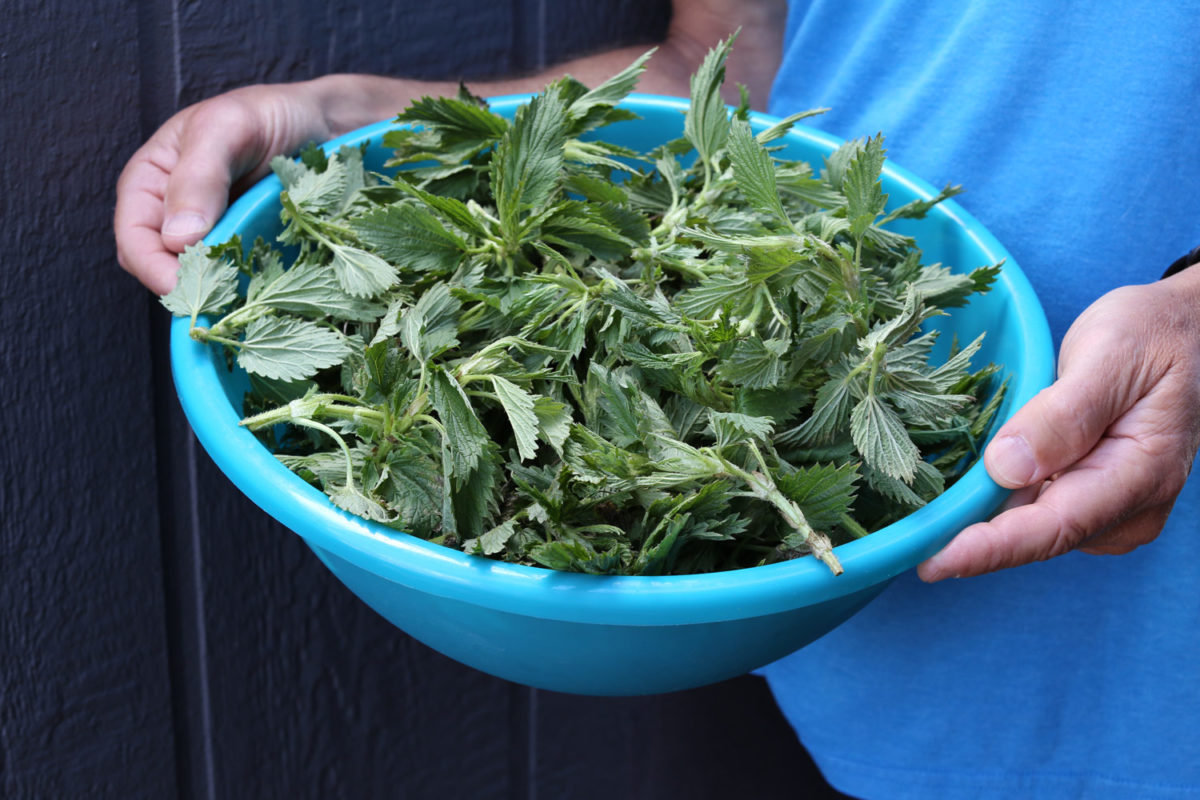
Stinging nettle (Urtica dioica) is famous among foragers—and yet, fear of the sting keeps a lot of people from enjoying it. Don’t be afraid! Bring a long-sleeved shirt, gloves, and scissors so you’re ready when the time comes. At the right stage for harvest, nettles look a bit like mint—the leaves in opposite sets along a squarish stalk, but with stinging hairs. Nettle leaves have serrated edges and appear wrinkled with veins on top. Harvest from spring to early summer, well before they flower. Snip the top few sets of leaves from the tender growing tips, stems included. Later, use tongs to drop them into boiling water. The sting is instantly neutralized. Cook until tender and enjoy as is or tossed into other dishes, and don’t forget to drink the cooking water as nettle tea. Or make nettle soup, a tried-and-true favorite.


Musk mustard
Musk mustard (Chorispora tenella) is one of my favorite spring greens, but it’s funny how variable it can be. Plants that flower at ankle height are not worth your time—but if you find a well-watered patch growing in good soil, you can get ample, tender spring greens, including both stems and leaves. Also called blue mustard or crossflower, it is a nonnative plant found primarily in the western half of the U.S., including the prairie states. The early leaves exhibit a range of forms and are somewhat bumpy with soft, sticky, glandular hairs. The stems are hollow, and the flowers are distinctive with 4 pinched purple petals. The name “musk” comes from the strong scent of crushed leaves, which some people think smell like mushrooms.
Dandelion
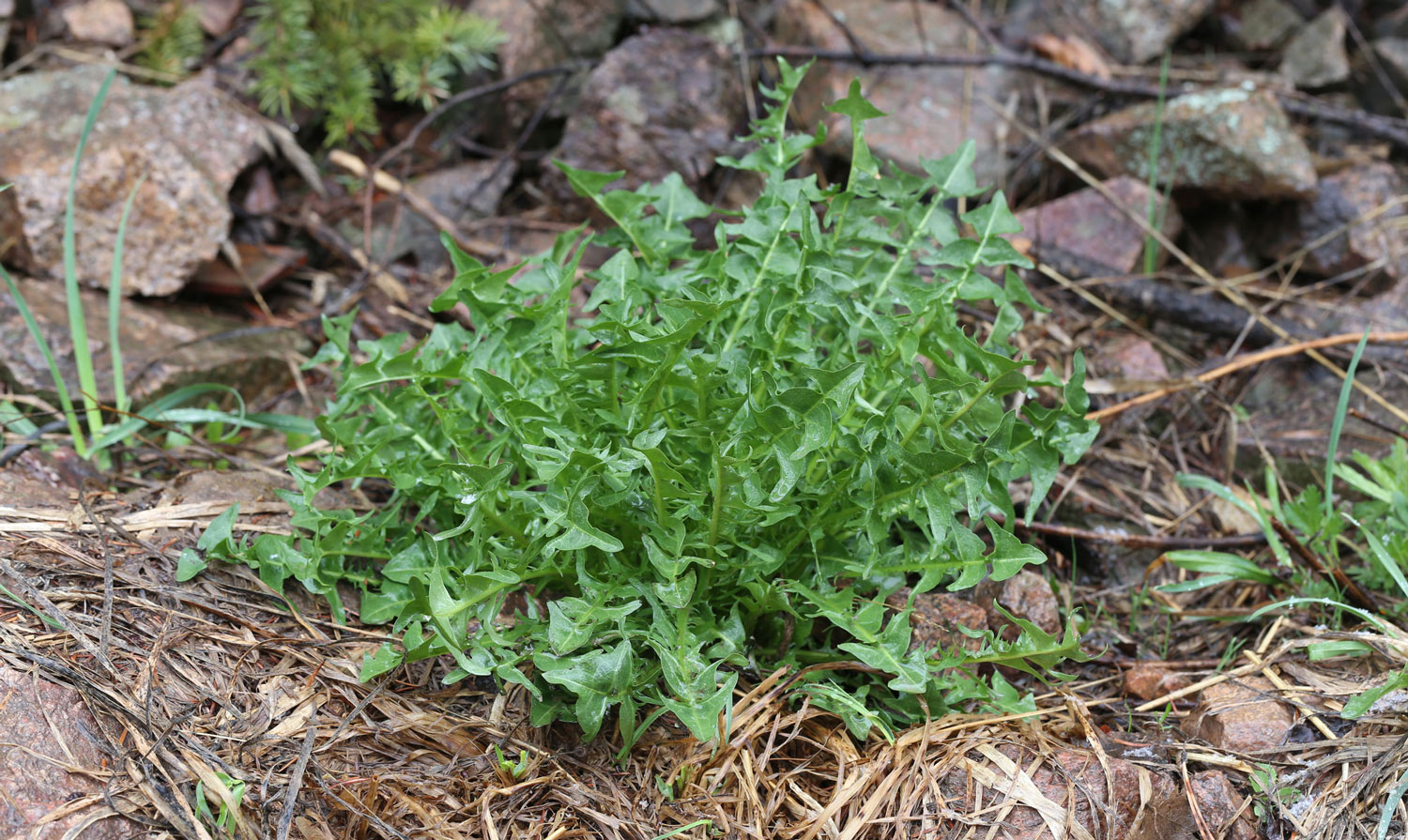
Dandelion (Taraxacum officinale) greens are at their best after a bit of moisture spurs fast growth, before too many flowers appear. Aim for robust plants not overly stressed by sun or mowing. Harvest from the center of each rosette, leaving ground-hugging leaves behind to reduce grit. A few flowers, buds, or stalks are no big deal; you can eat them too. Swish your greens in a few bowls of water, sort out the grass and yellowed bits, air-dry briefly, and refrigerate so they’re ready to go. Dandelion greens are edible fresh or cooked, but they are always somewhat bitter. Try fine-chopping them into dishes with other strong flavors—like carrot raisin salad, or tuna (jackfruit) salad with celery and grapes. They work well in vegetable burgers too. My favorite use is dandelion manest, a soup served as an appetizer in parts of Italy. Click through for the vegan or meat-lovers version.

Dock
Curly dock (Rumex crispus) is the most well-known of the docks, but there are various species, all with similar traits. Look for rubbery dark green leaves, the leaf margins more or less ruffled (like curly kale) but not toothed or serrated. At the bottom of the leaf stalks is a thin papery sheath, which on the youngest leaves has clear slime inside. There is sometimes dried slime on the leaves too. The leaves are hairless and unroll sideways like scrolls unfurling. These young, unfurling or newly unfurled leaves are best for eating. Slime means they are at a good stage. Test the flavor—tart is best; if they are astringent (sucking the moisture from your mouth) they are inferior but still edible. Harvest from the base of the leaf stalk, then chop and cook stalks and leaves together. They’re edible raw, but I prefer them cooked.


Cutleaf vipergrass
Very few people know you can eat cutleaf vipergrass (Scorzonera laciniata), a non-native weed that has been spreading throughout the West. It is similar in many regards to its edible cousin, salsify (Tragopogon spp.), but upon closer inspection most of the narrow, grass-like rosette leaves are cut about midway up into several sets of slender lobes. The flowering form is a branched plant with small, yellow, dandelion-like flowers, and all parts exude white latex. Scorzonera has an edible taproot, best before the stem develops, as well as edible greens and tender, delicious flower stalks and roundish buds that are excellent boiled. This plant can replace entire carpets of grass, so look closely to see if you have it. Lush plants growing in rich, well-watered soil make the best food.

Whitetop
Whitetop (Lepidium draba syn. Cardaria draba) is a noxious weed that takes over large areas, becoming very noticeable when the “white tops” are in bloom. Each is filled with small, 4-petaled white flowers above a grayish-green plant with simple, unlobed, alternate leaves that clasp the stalk. You’ll want to catch it before it flowers, when the tightly clustered bud heads are still closed—these make a nice substitute for broccoli. Clip the heads and attached sections of stalk where still tender and use both along with any attached leaves. These are often spicy raw, but they mellow with boiling. Boil briefly and top with cheese sauce, toss into a stir fry, or blanch and freeze for later. The nice thing about invasive plants is that you can get a lot quickly. Steer clear of any areas with signs of herbicide treatment—like tortured plants, prematurely dead plants, or signage.


Creeping bellflower
Creeping bellflower (Campanula rapunculoides) is not a well-known edible plant, but it’s one of my favorites for mild, cooked greens. This species was widely planted around historic homes for its dangling, bell-shaped purple flowers, which often hang from one side of a single, erect stalk. It forms dense colonies and can take over large areas. The greens are good before flowering, although they appear a bit nondescript at that stage. Look for rough, triangular to heart-shaped leaves with serrated margins that are darker on the upper side. Once it bolts, the leaves are held alternately along light-colored, somewhat juicy stalks. Early basal leaves and tender, leaf-bearing young stalks (my favorite) can be used together raw or cooked, but the leaves are much better cooked. I like them in curries, saag paneer, and other seasoned dishes.

Mallow
I don’t normally seek out mallow (Malva neglecta and close relatives)—the leaves are okay, but they’re a bit fuzzy and not my favorite for eating. However, I definitely use any plants I weed from my garden beds. This is a common weed with roundish leaves, each with a slit at the base. The leaf margins have rounded, shallow lobes. Flowers are white with pink stripes, producing fruits that look like cheese wheels, which is why it is also called “cheeseweed.” The fat roots, along with the leaves and stems, make an excellent tea for soothing a sore throat. Weed your mallow, wash and chop the roots, and set them to dry along with the leaves—they’re great to have on hand when you need them. Honestly the leaves are not bad cut into cold salads with chunky vegetables, or mixed into a pan of eggs, either. You can also dry and powder them for winter smoothies.


Hops
No, hops (Humulus lupulus) is not just for beer. You can eat it too! To find it, look for a vining plant with simple, palmately divided leaves like a maple leaf, occurring in opposite pairs along the vine (technically a “bine”). If the plant has compound leaves divided into distinct leaflets, it might be clematis or Virginia creeper—not edible. The edible parts of hops are the thin spring shoots and growing vine tips. Break these off where still tender. They are edible raw but quite raspy; I much prefer them cooked. As you might expect, they have a strong flavor; I like them in stir fries with other ingredients to balance the taste. In some parts of Europe, hops shoots are considered a delicacy. To ensure the health of this native perennial, do not pick all the growing tips in a patch—leave a good amount to grow to maturity.
Notes:
- The cover photo includes wild asparagus, which is also an excellent spring edible; please click the link for more info.
- Dock and nettles are high in oxalates, if that concerns you. Most of us need not worry. Oxalates are a regular part of the human diet, found in coffee, tea, rhubarb, spinach, almonds, and more. Eat oxalate-rich plants in normal human quantities along with other foods.
WEB CLASS:
Spring Edibles
Want to learn more? Check out the Spring Edibles web class for an in-depth look at five great spring edibles.
Stinging nettles are some
Of my favorites but I have a really really hard time finding the in Colorado! What kind of habitats does it like around here?
Hi Noelle,
In Colorado, I find nettles in river and creek floodplains, under tangled shrubs of chokecherry/plum/poison hemlock in the lowlands, and willow at higher elevations, to about 10,000 feet. Moist areas without creeks can be good too; I have found great patches of nettles in moist valleys on the Western Slope, and on dark north-facing slopes at middle elevations on the Eastern Slope.
Wow, I thought cutleaf vipergrass was another Tragopogon species. Thanks for the info! I have both growing in my yard, but IMO vipergrass is better than salsify. Both are good, though. I keep trying to control my weeds by eating them, but I can’t keep up.
You are most welcome! I have to give credit to Sam Thayer for teaching me this plant, about 10 years ago. He includes it in his Field Guide to Edible Wild Plants of Eastern & Central North America. But I agree, I prefer scorzonera greens to salsify greens. They have a subtly sweet flavor I quite enjoy. And the budding heads with tender stalks and attached leaves are a real treat.