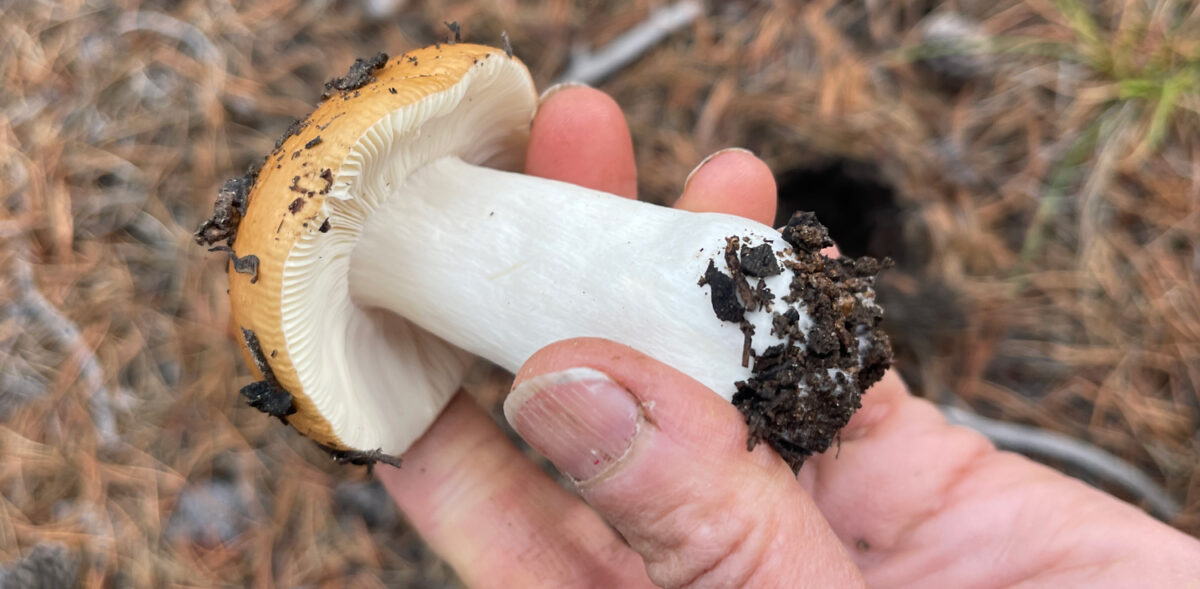
For years the copper brittlegill (Russula decolorans) was not on my radar, mainly because I don’t love the firm, almost crunchy sautéed texture of other Russula species I’ve tried. But this year it called to me—and in September we found the motherlode, copper brittlegills covering the hillside, more than we could pick.
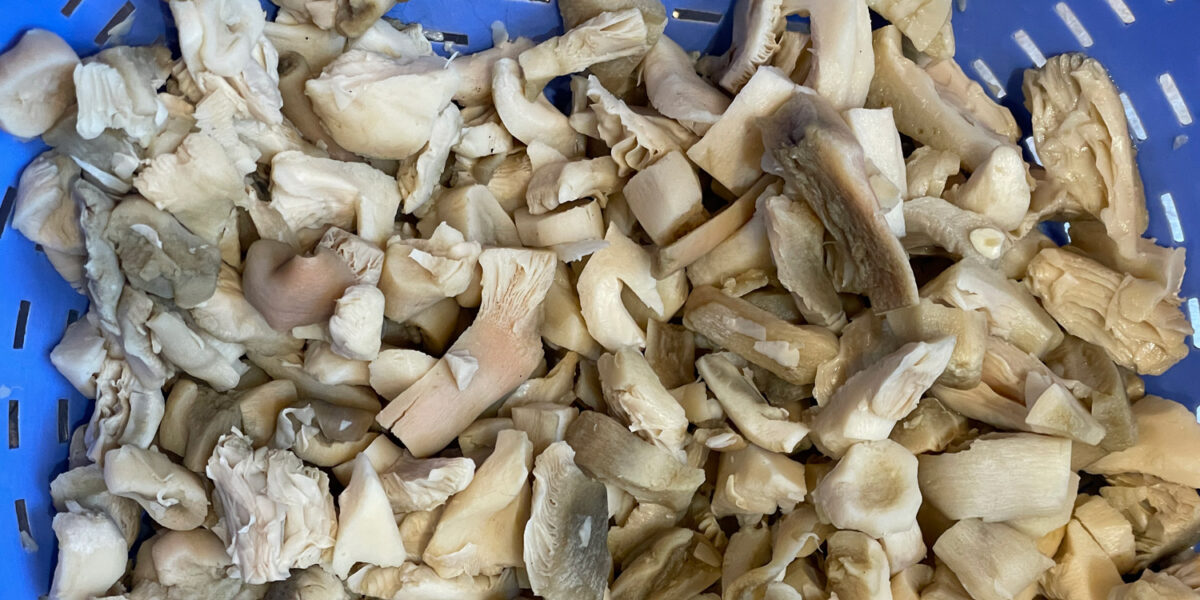
I decided to boil them, taking my cue from Eastern European culinary traditions. It works miracles for the texture! After a 10-15 minute boil and squeeze, the mushrooms became dense and meaty while retaining a good, mushroomy flavor.
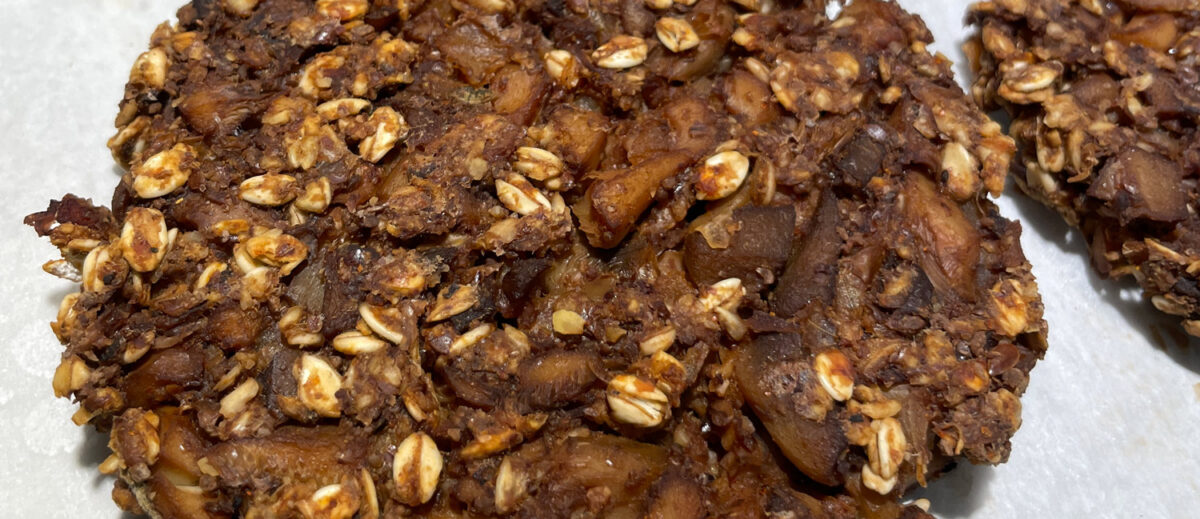
They were great in my first-time batch of mushroom burgers—which I made with garlic and onion, sage, Worcestershire sauce, and tamari, with oats, flaxseed, and acorn flour to bind. I formed the patties with wet hands and baked them until firm and browned. Husband was pleased! This should work with other edible Russula species—so now I’m excited to forage enough to freeze a few batches.
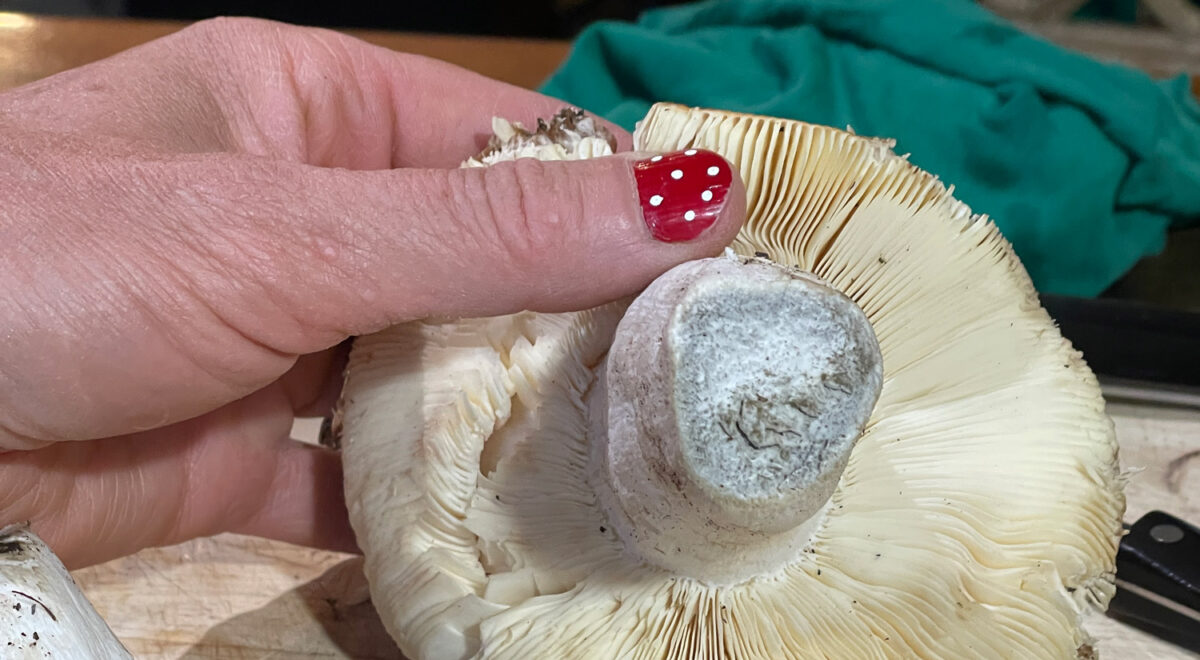
Like other Russula species, the copper brittlegill has whitish to cream gills, brittle flesh, and a stalk that snaps like chalk. Broken parts develop gray tones, as you can see in the cut stalk above.
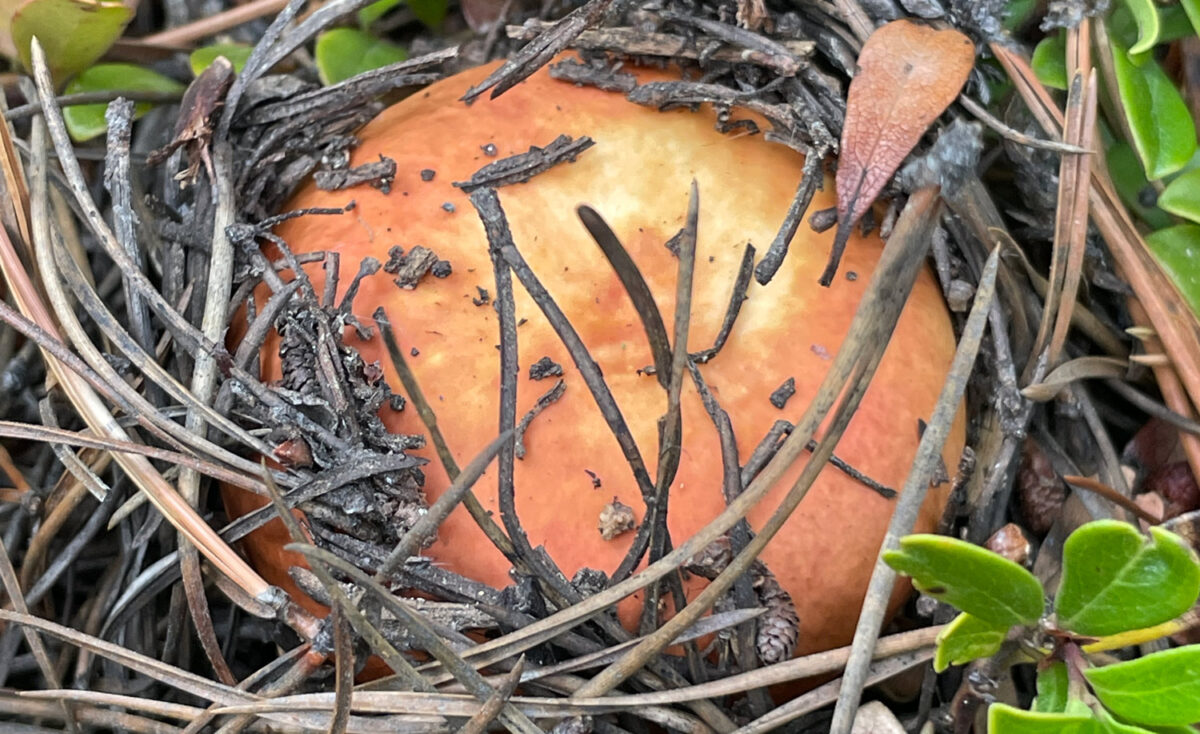
Fresh caps are a copper-orangish color. We found them under pines—as illustrated by the needles above (pine needles are held together by a sheath at the base). Specifically, we found them under lodgepole pine around 9,200 feet in Colorado, after a rainy spell. The spore print is ochre, or earthy yellow-brown.
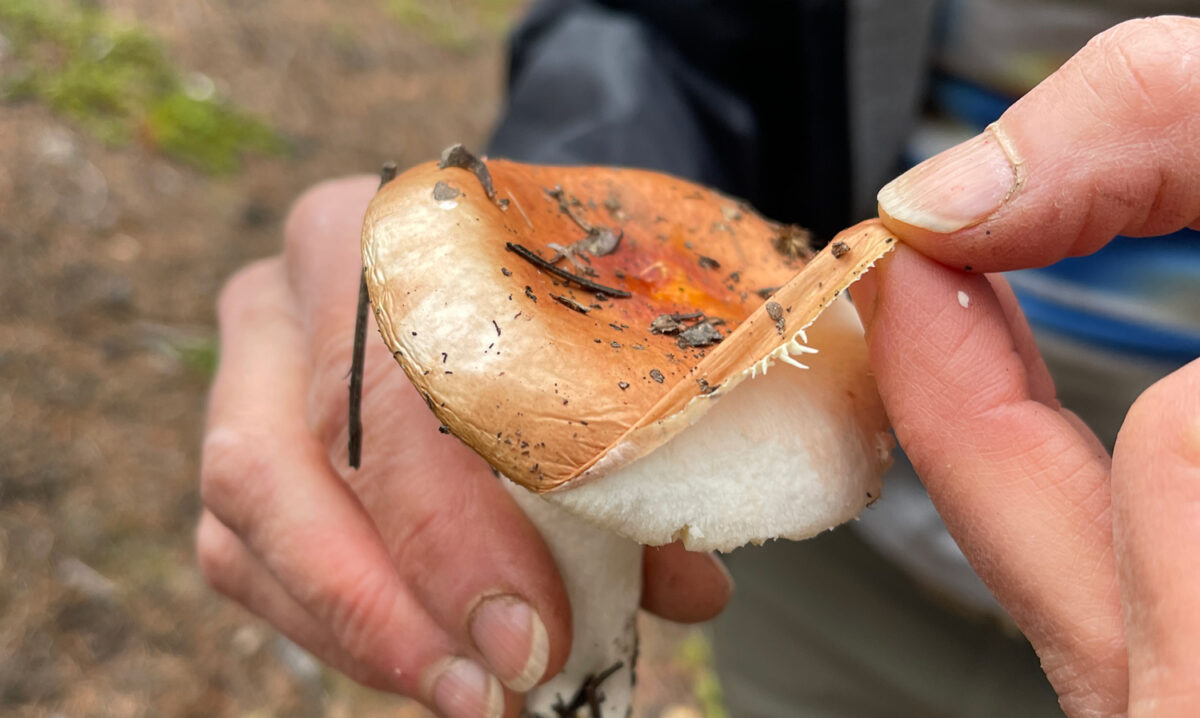
I’ll admit cleaning them is a bit of a chore. The cap is glutinous when wet, causing dirt and duff to stick to it. You can peel off some of the thin cuticle near the edges, but it’s not often a clean peel, and the dirt doesn’t rub off easily, so I ended up filleting the rest of the top layer off with a knife. Still, it was worth it!
Caution: Russula is a genus probably best suited to intermediate or advanced foragers. Many species are edible, but the hot ones (like red-capped members of the Russula emetica group) can cause digestive upset without special processing. One poisonous Asian species, Russula subnigricans, has caused deaths; its flesh stains reddish. Some authorities advise people not to eat any Russula species that stain dark brown or black.
Leave a Reply